A Difficult Decision and a New Direction


“There is a saying I’ve held onto for a long time: Everything will be okay in the end. If it’s not okay, it’s not the end.”
I have been thinking about that sentence a lot lately.
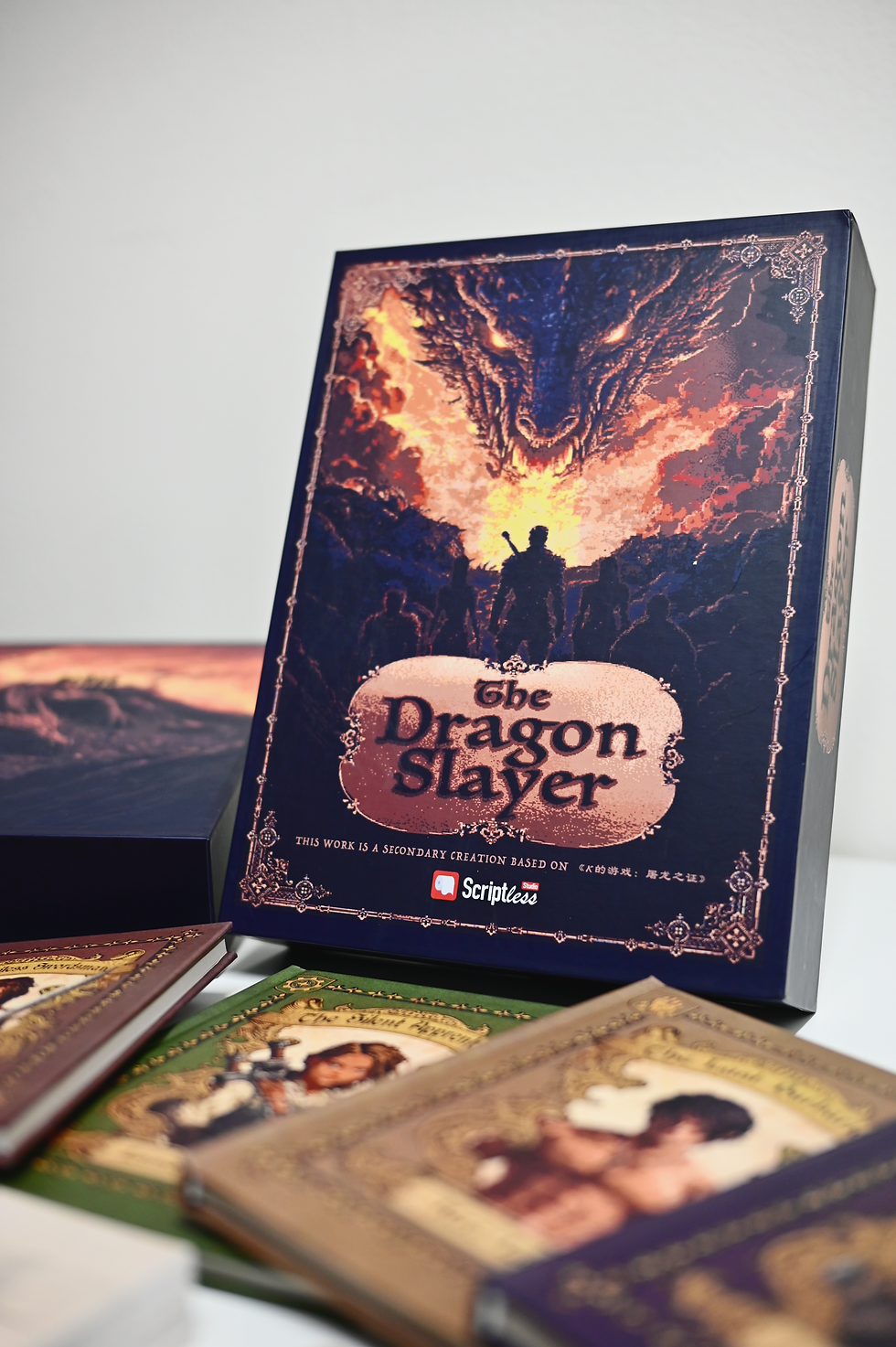
As I write this, Scriptless Studio has completed five Jubensha titles. Each one represents an enormous amount of time, imagination, experimentation, and care from our team.
But today, I need to share a difficult decision.
We will no longer sell the current editions of these games, even though there are still unsold copies sitting in my garage. We have also officially closed the Script Lab Jubensha venue in San Diego after one year of operation.
Neither decision was easy.
We could have continued selling our existing games, and we probably could have kept the venue running a little longer. From the outside, continuing as we were may have looked like the safer choice.
But after months of honest and sometimes difficult conversations, we realized that maintaining the status quo was not the same as moving forward.
We still believe in these stories, but we also know they can become much better. Reaching that potential requires us to stop, reorganize, and rebuild.
Scriptless Studio will therefore become part of Script Lab. Moving forward, we will work under one name toward a shared goal: creating high-quality, GM-less Jubensha games for English-speaking players.
I want to explain why we are making these changes, what we have learned, and where we hope to go next.
Why Are We Remaking Past Games?
I still believe deeply in the stories we created. That is exactly why I do not want to keep selling them in their current form.
Our previous games relied heavily on a Game Master. Players familiar with our work will know that every title included interactive mini-games and special mechanics. Many of these systems required a GM to calculate results, manage information, explain rules, and keep the story moving.
This worked when an experienced GM was always present. Outside that environment, however, it created a major barrier.
A group could not simply buy one of our games, open the box, and begin playing. They first needed to find someone willing to study the entire game, understand its hidden systems, manage the experience, and give up the opportunity to participate as a player.
That is a lot to ask, especially from people discovering Jubensha for the first time.
We have also received a great deal of feedback about our earlier editions. Some of it was encouraging, while some of it was difficult to hear. All of it helped us understand where the games could improve.
The stories themselves still matter to us, but the products surrounding them need more work. The artwork, graphic design, packaging, rules, components, mechanics, and onboarding all need to support the experience more effectively.
I do not see this feedback as a failure. I see it as a responsibility.
We understand these games much better today than we did when we first created them. We have learned more about what English-speaking players need, where confusion happens, and how much guidance a first-time group requires. Most importantly, we have learned that an interesting script is not automatically a complete commercial game.
My thinking is simple: if we have the opportunity to turn something we made into something we can truly be proud of, we should not settle for less.
These new editions will not be minor revisions. We are rebuilding each game from the ground up so players can learn and manage the experience themselves without a professional GM.
This requires us to redesign systems that previously depended on a host. We need to reconsider how information is revealed, how scenes are paced, and how the game guides players through unexpected situations. The physical product must also improve so that the artwork, components, and presentation match the ambition of the story inside.
We are not interested in releasing the same games with new covers.
We want to create the versions these stories always deserved.
Why Did We Close the San Diego Venue?
First, I want to thank Quinns and People Make Games for creating The Murder Game Revolution That Has Gripped China.
That video introduced Jubensha to a huge international audience. It showed people that murder mystery games could be more emotional, theatrical, and ambitious than they may have imagined. It also played an important role in my belief that Jubensha could find a home in the English-speaking world.
At the same time, the video understandably created very high expectations.
I do not think that is a bad thing. Those expectations reflect genuine excitement about what this format can become.
Operating the San Diego venue, however, taught us how difficult it is to deliver that kind of experience consistently.
A great Jubensha venue needs far more than a room and a collection of scripts. It depends on skilled GMs, thoroughly tested games, reliable operations, and players who understand what kind of experience they are joining.
In China, Jubensha developed within a large ecosystem of venues, writers, publishers, professional hosts, and experienced players. In the United States, that ecosystem is still being built.
As a small team, we were trying to run a physical venue while training GMs, developing products, gathering feedback, and introducing an unfamiliar game format to new players. I am proud of what we accomplished, but I also have to be honest: we did not have the time or resources to do all of those things as well as we wanted.
Closing the venue was painful because it was never just a business location to us.
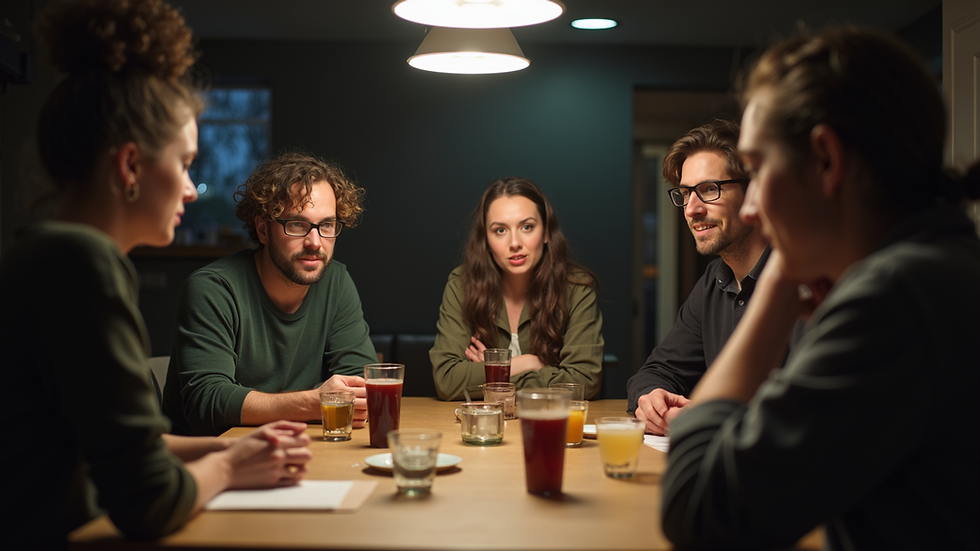
It was where we met our players and saw our ideas become real. We watched people laugh, debate, become frustrated, make discoveries, and connect with one another around the table. That experience taught us more than we could have learned from developing games in isolation.
I am deeply grateful to everyone who visited us, played with us, gave us feedback, or introduced a friend to Jubensha in San Diego.
The venue may be closed, but everything we learned there will shape the games we make next.
We are not stepping away from Jubensha. We are choosing a different way to bring it to people.
Instead of creating an experience limited to one room and one trained GM, we want to make games that people can experience at home, in local game stores, at conventions, and within their own communities.
Why Are Scriptless Studio and Script Lab Becoming One?
In the past, Scriptless Studio focused primarily on creating games, while Script Lab focused on operating the venue and bringing those games to players.
Over time, we learned that these responsibilities cannot really be separated.
A strong story does not automatically become a strong product. Even the most imaginative script still needs clear rules, thoughtful visual design, careful testing, and a practical understanding of how real players behave at the table.
The venue showed us how people actually experienced our work.
We saw which moments excited them and which instructions caused confusion. We also saw where certain mechanics interrupted the story and which scenes stayed with players after the game ended.
By bringing Scriptless Studio into Script Lab, we are bringing those lessons closer to the creative process.
Writing, game design, player experience, production, and marketing all influence one another. Treating them as parts of the same process will help us make better decisions from the beginning.
The question guiding us is simple:
How do we create a Jubensha experience that people can understand, enjoy, and remember?
This restructuring is our attempt to answer that question more seriously.
What Happens Next?
Our next major step will be crowdfunding the first remastered game.
We are choosing crowdfunding because producing the kind of game we envision requires a significant investment. The new edition will need original artwork, graphic design, editing, physical components, prototypes, manufacturing preparation, and extensive playtesting. We also need to redesign the systems that once depended on a GM.
For a small independent team, this is a major undertaking.
Crowdfunding will help us fund production, but it will also help us find the community that wants this kind of game to exist.
We do not want to manufacture thousands of copies based only on our own assumptions. We want to understand how many players are genuinely interested and what they need in order to feel confident bringing Jubensha to their own table.
We also want our supporters to see how the game is being made.
Before the campaign launches, we will share more about the redesign, the new GM-less systems, the artwork, and our playtesting process. We will also talk openly about the decisions and compromises that come with developing a physical game.
Not every update will be exciting. Sometimes progress means rewriting the same rule repeatedly or accepting that a mechanic we love simply does not work without a GM. There may also be production challenges and delays along the way.
We want to be honest about that process rather than disappear for half a year and return only when we have something to sell.
Our hope is to build this alongside the people who believe Jubensha deserves a place in the English-speaking world.
How Can You Support Us?
Right now, the most meaningful support is not necessarily buying something. It is simply staying with us.
You can follow our work, subscribe to our updates, read our development blogs, or share Script Lab with friends who enjoy narrative games, murder mysteries, role-playing, escape rooms, and unusual tabletop experiences.
When our crowdfunding page goes live, we hope you will take a look, even if you are not yet sure whether the game is right for you. Honest feedback about what excites or confuses you will help us make the experience more approachable for new players.
Every follow, comment, share, and thoughtful response helps us understand whether there is a future for this format here.
Starting now, we are committing to publishing at least one blog every month. We will use these posts to share our progress, explain important design decisions, and talk openly about what we are learning.
I know some people may be disappointed that our previous games are no longer available. I also understand that closing the venue may look like a step backward.
From the outside, restructuring often looks like stopping. From where I am standing, it feels more like we are finally giving ourselves the space to build Script Lab properly.
I cannot promise that the road ahead will be easy or that every plan will work exactly as intended.
What I can promise is that we will no longer release a game simply because it is finished enough to sell. We want to make something that our team believes in and that respects the time, money, and trust of every player who opens the box.
We want Jubensha to grow beyond a single venue and reach people who have never experienced anything like it before.
This is not the end of Script Lab.
In many ways, it feels like our first honest beginning.
Thank you to everyone who visited our venue, played our games, shared feedback, or believed in this idea before we knew exactly what it could become.
I hope you will stay with us for what comes next.
—Oliver
Founder, Script Lab

Comments